Brand Strategy · Identity & Image Analysis
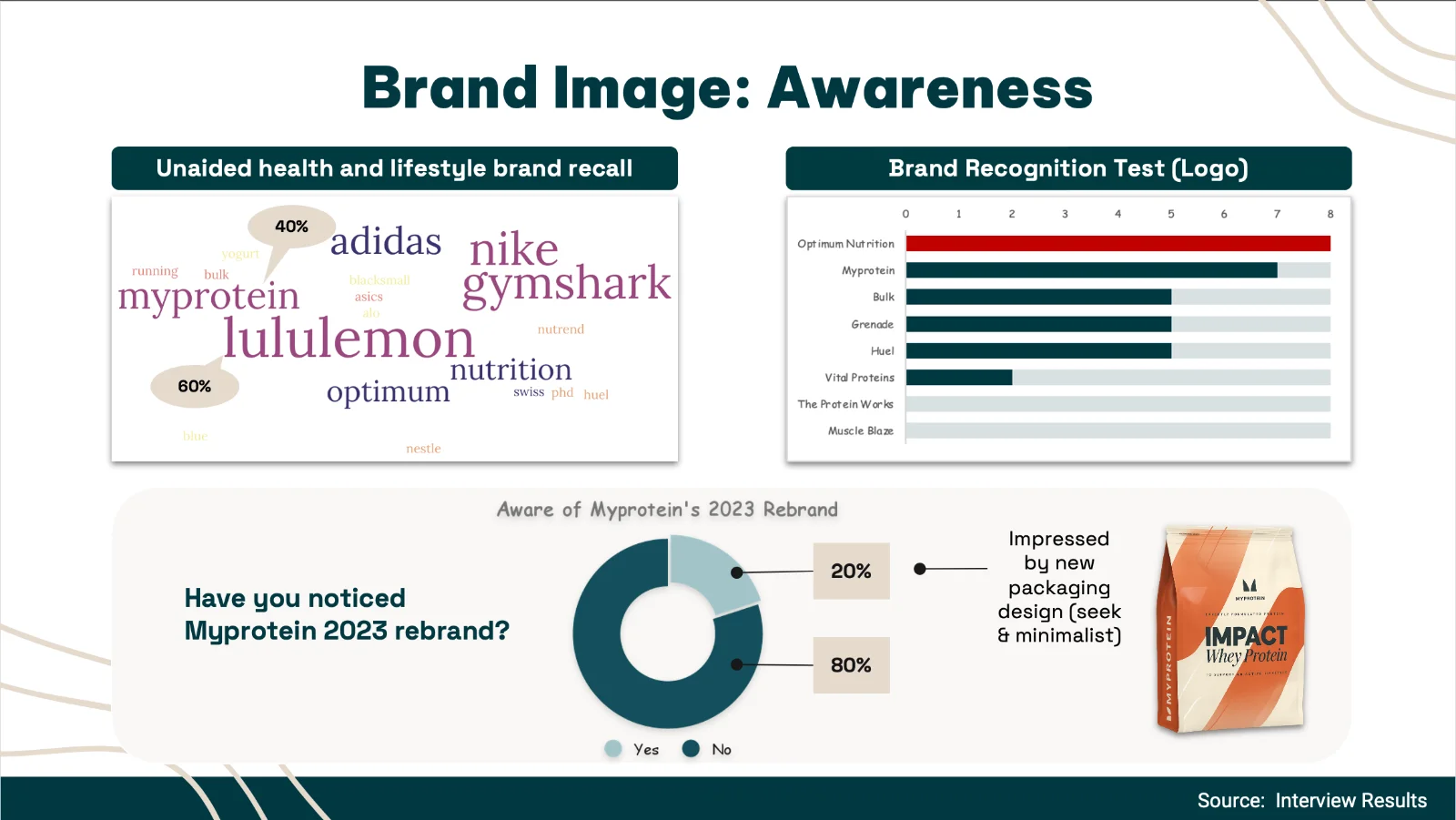
Myprotein repositioned its brand in 2023, moving beyond performance-focused sports nutrition towards a broader health and wellbeing identity. Our project examined whether consumers had recognised this change and how effectively the new positioning appeared across the customer experience.
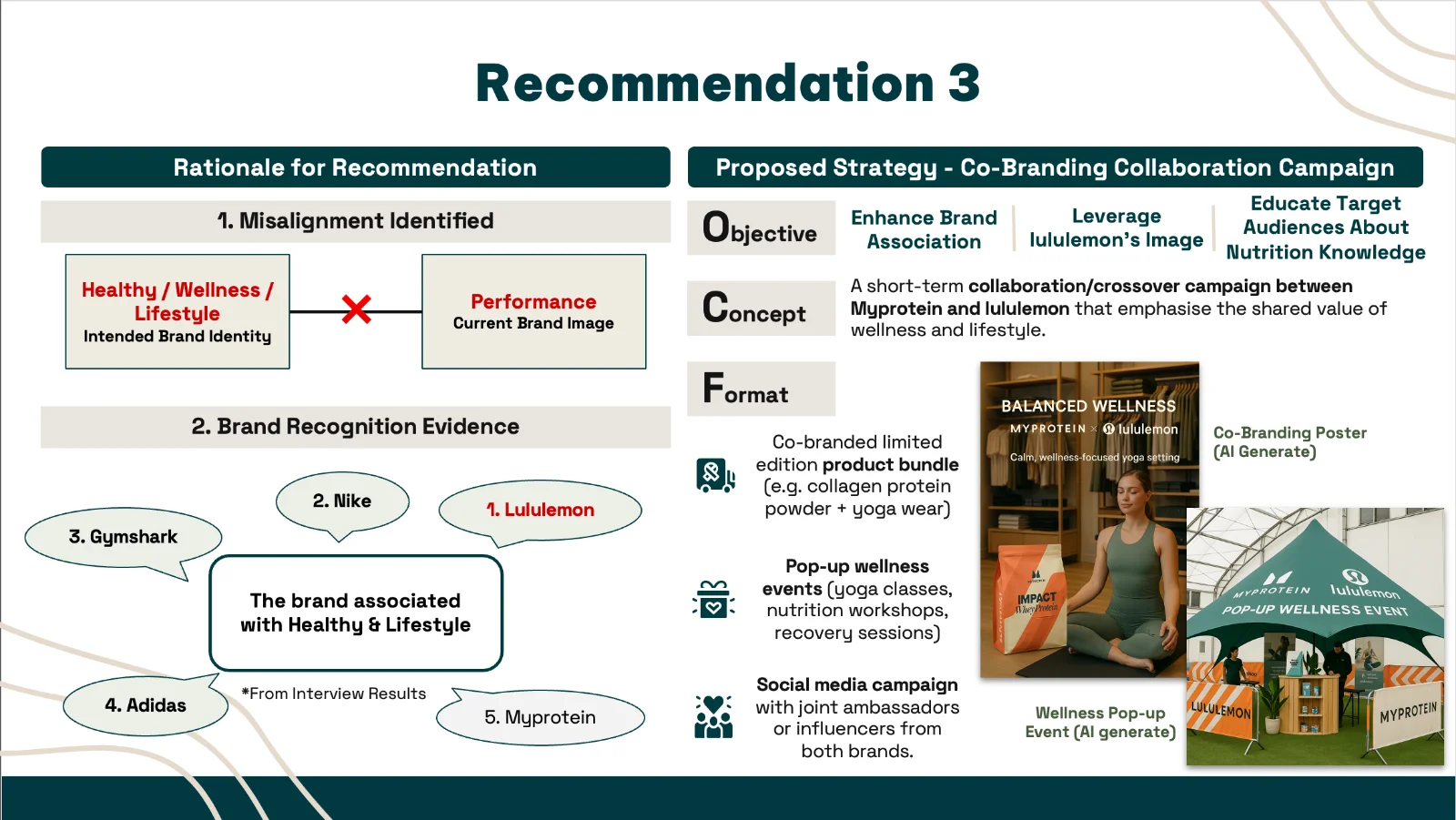
As part of a five-person LSE team, I was responsible for analysing Myprotein’s intended brand identity and comparing it with its consumer image. Using Aaker’s Brand Identity Model alongside survey and interview findings, I found that established associations with performance and masculinity remained stronger than the new wellbeing message. I then developed a Myprotein and lululemon collaboration concept to strengthen the brand’s lifestyle and wellness associations.
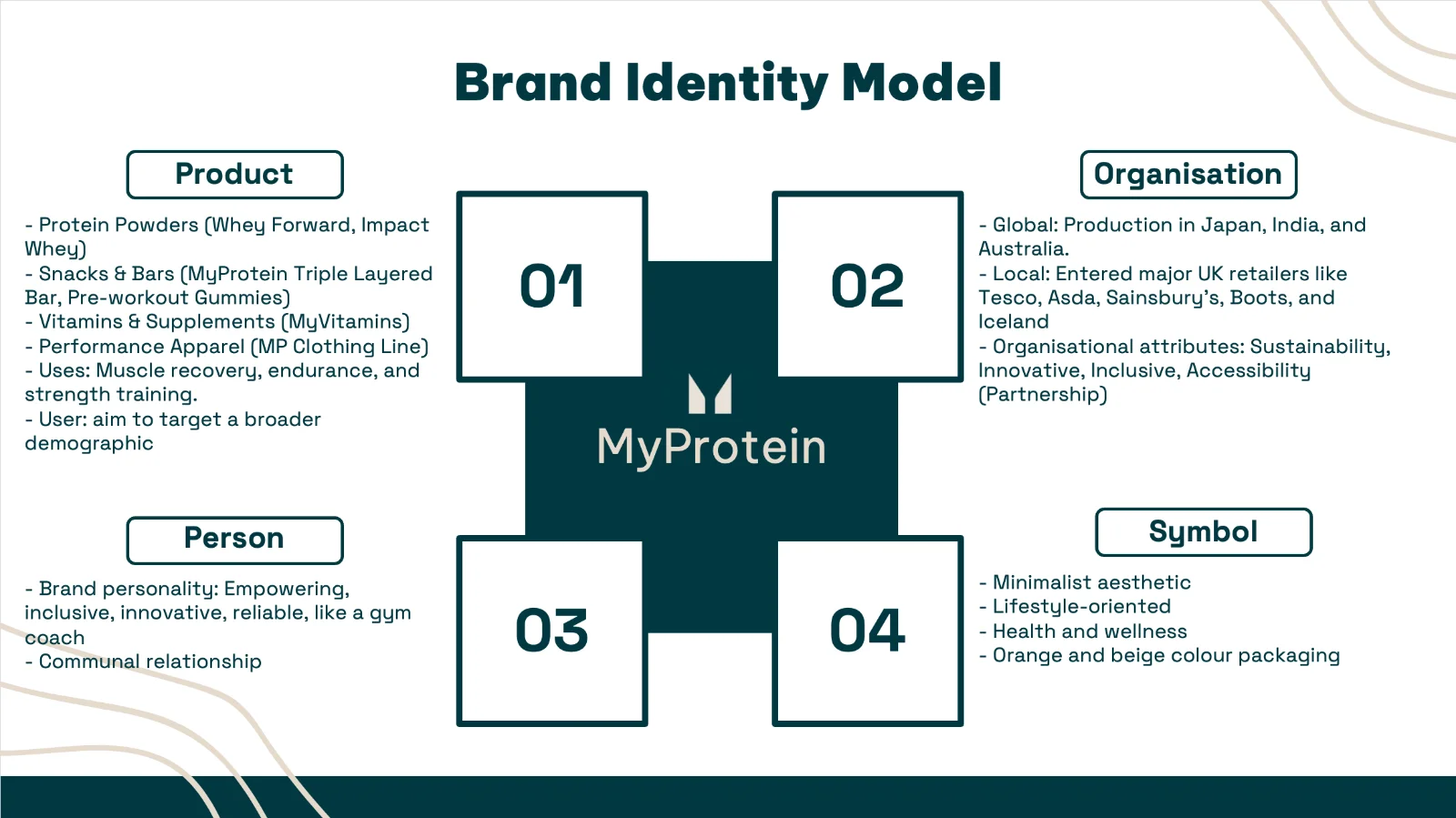
Applied Aaker’s model to assess Myprotein as a product, organisation, person and symbol, defining the identity intended by its 2023 rebrand.
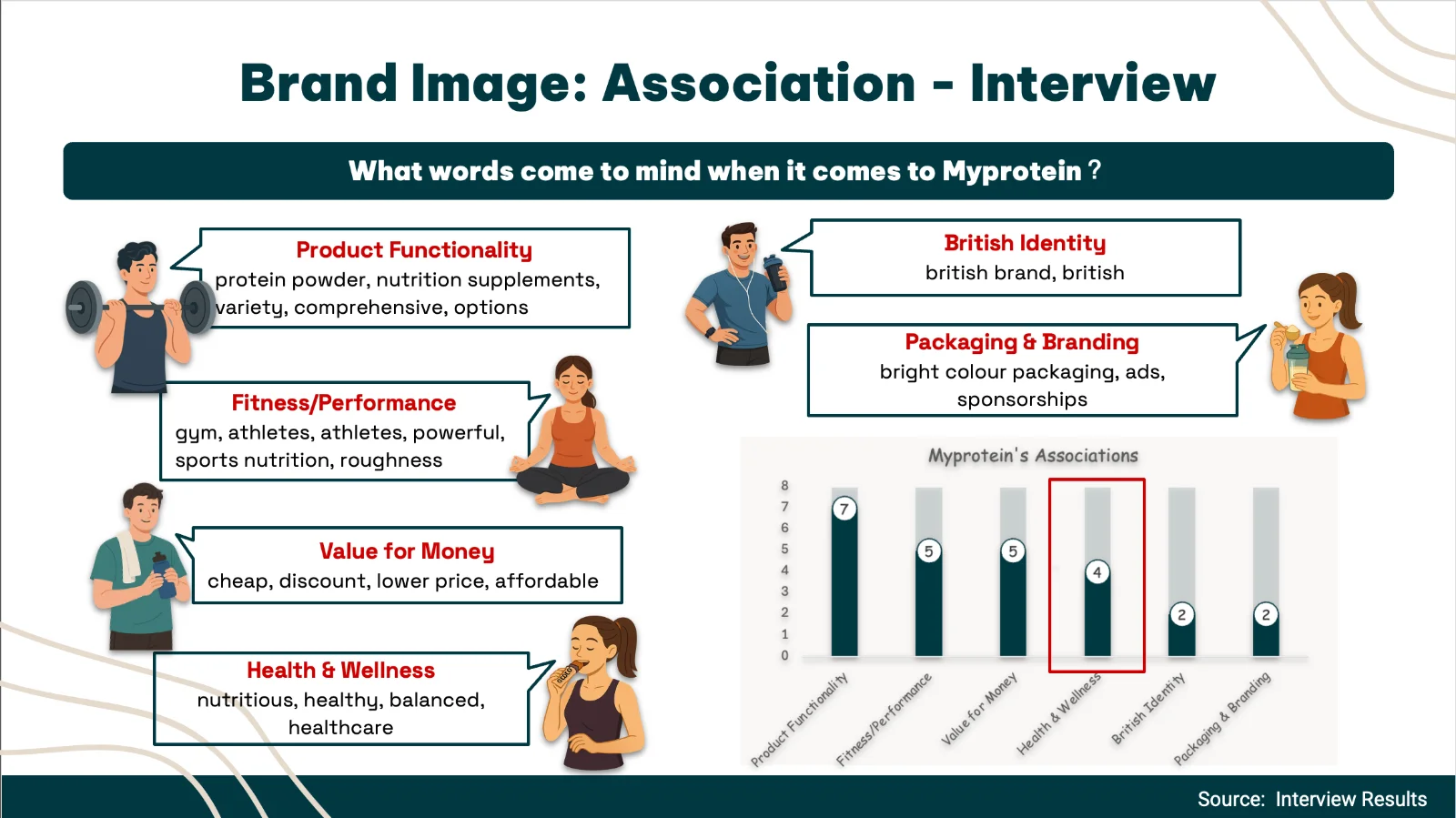
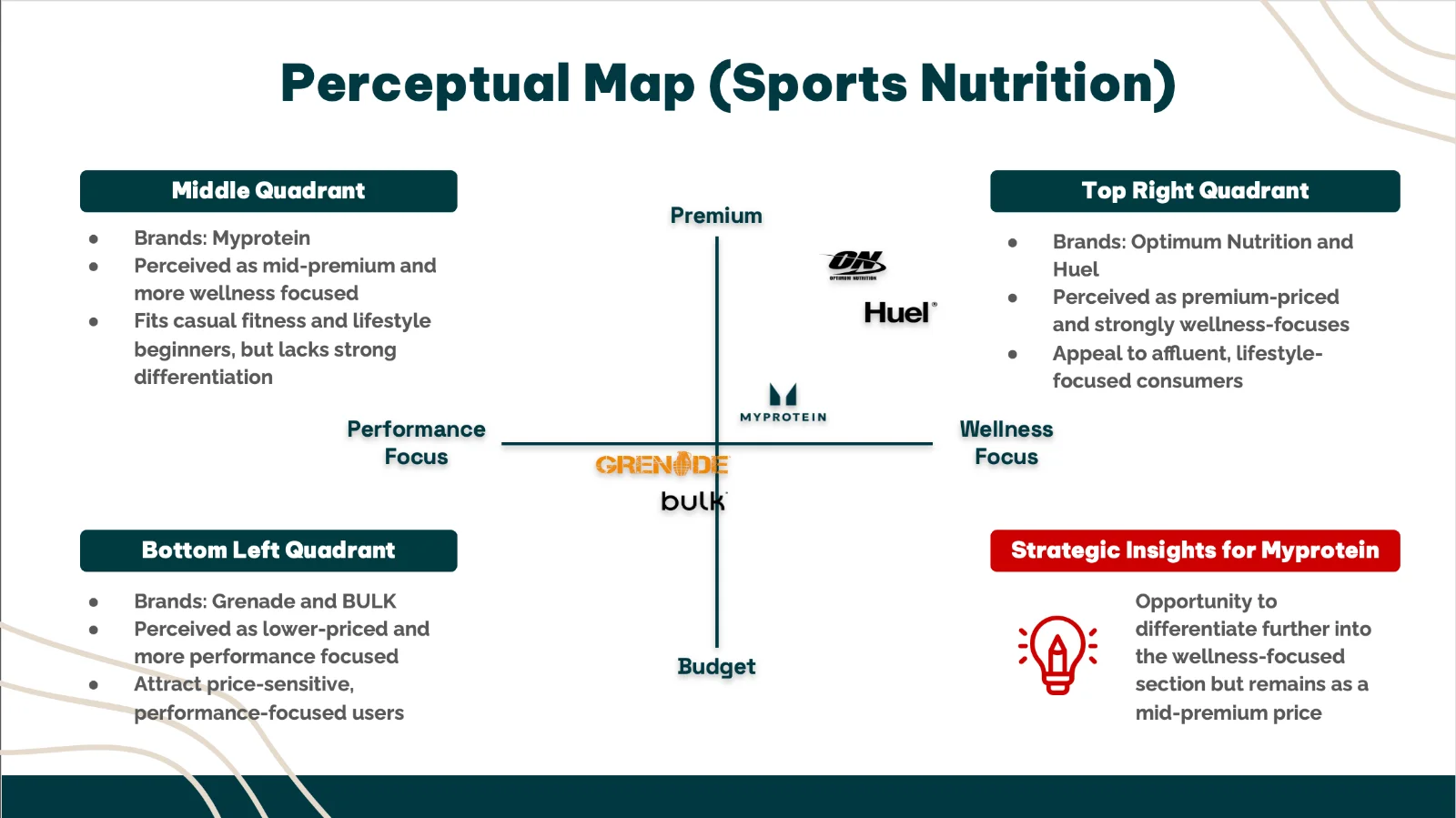
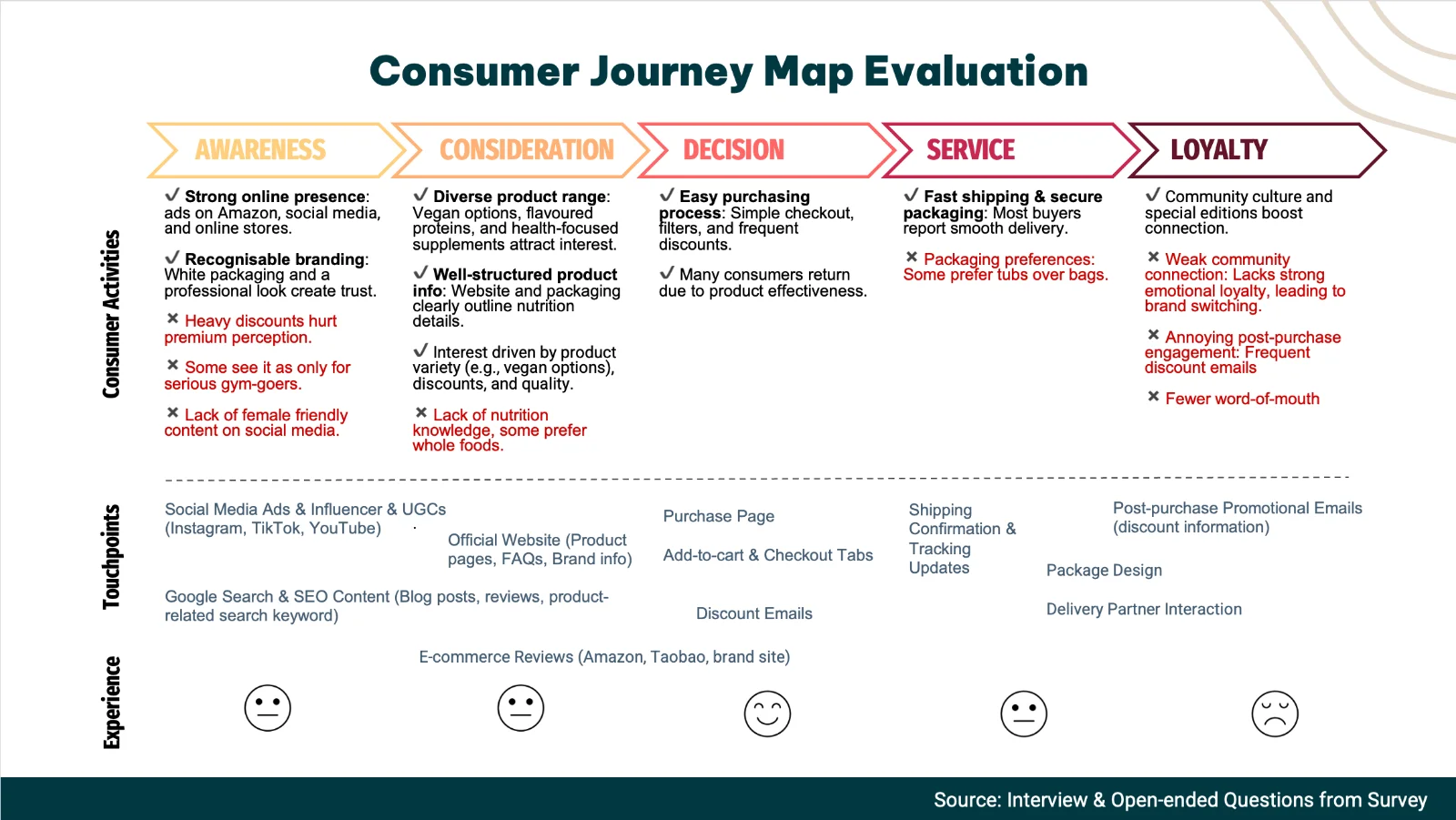
Synthesised quantitative and qualitative findings to identify associations with performance, masculinity, affordability and product functionality.
Compared Myprotein’s intended wellbeing positioning with consumer perceptions, showing that its established performance image remained dominant.
Developed a collaboration concept combining product bundles, wellness events and shared ambassadors to connect nutrition with a broader wellbeing lifestyle.
This project showed me that changing a brand’s visual identity does not automatically change how consumers understand it. Myprotein had broadened its intended positioning, but established associations with performance and masculinity remained stronger than its new wellbeing message. Comparing brand identity with consumer research helped me identify where the repositioning had not carried through and develop a recommendation focused on closing that gap.