
Market Entry Strategy · Segmentation & Pricing
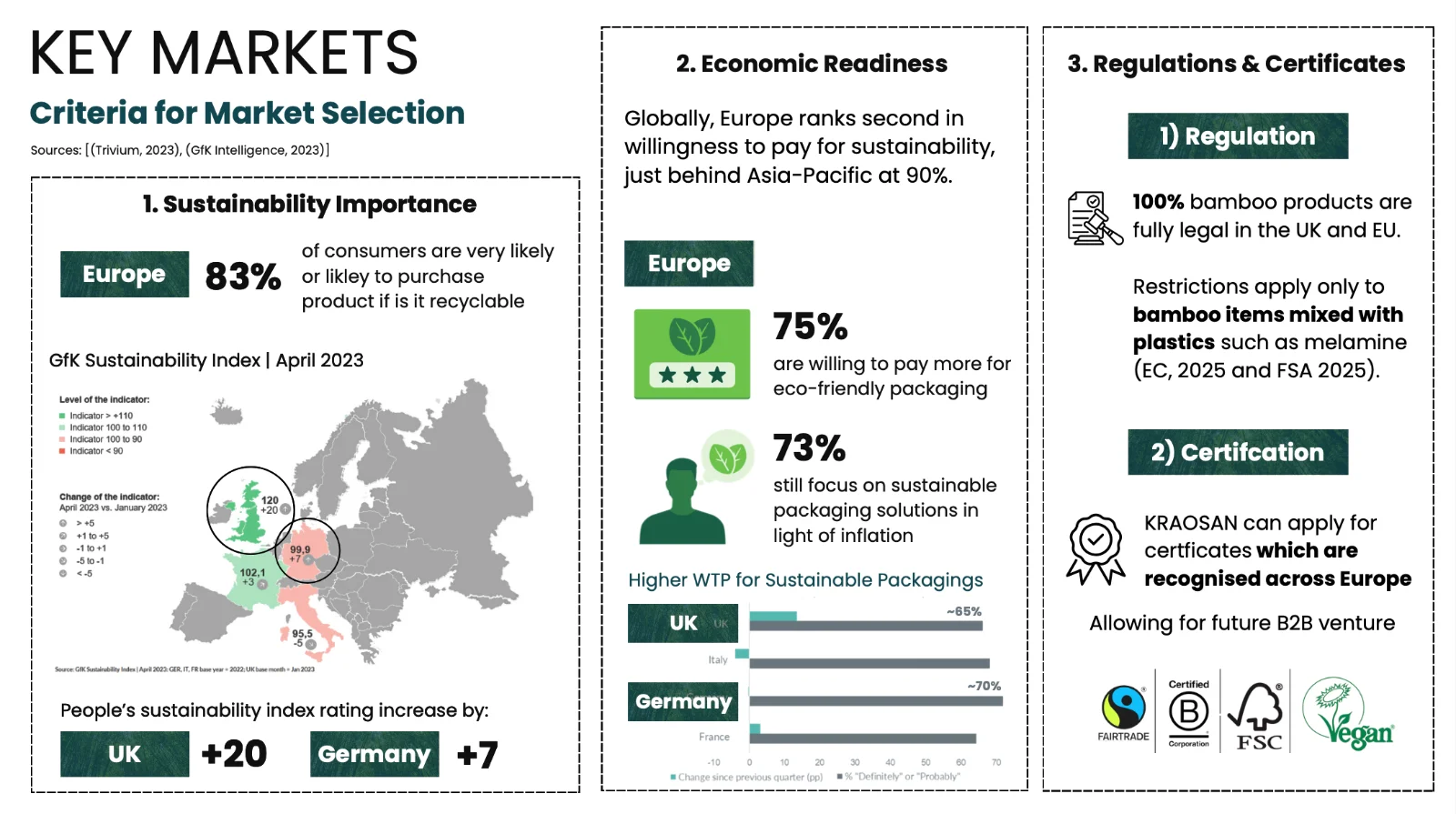
KRAOSAN is an Indonesian social enterprise that creates handcrafted bamboo products while supporting women in rural communities. The company wanted to diversify beyond Southeast Asia and identify a viable route into Europe, despite low brand awareness, established competitors and high logistics costs.
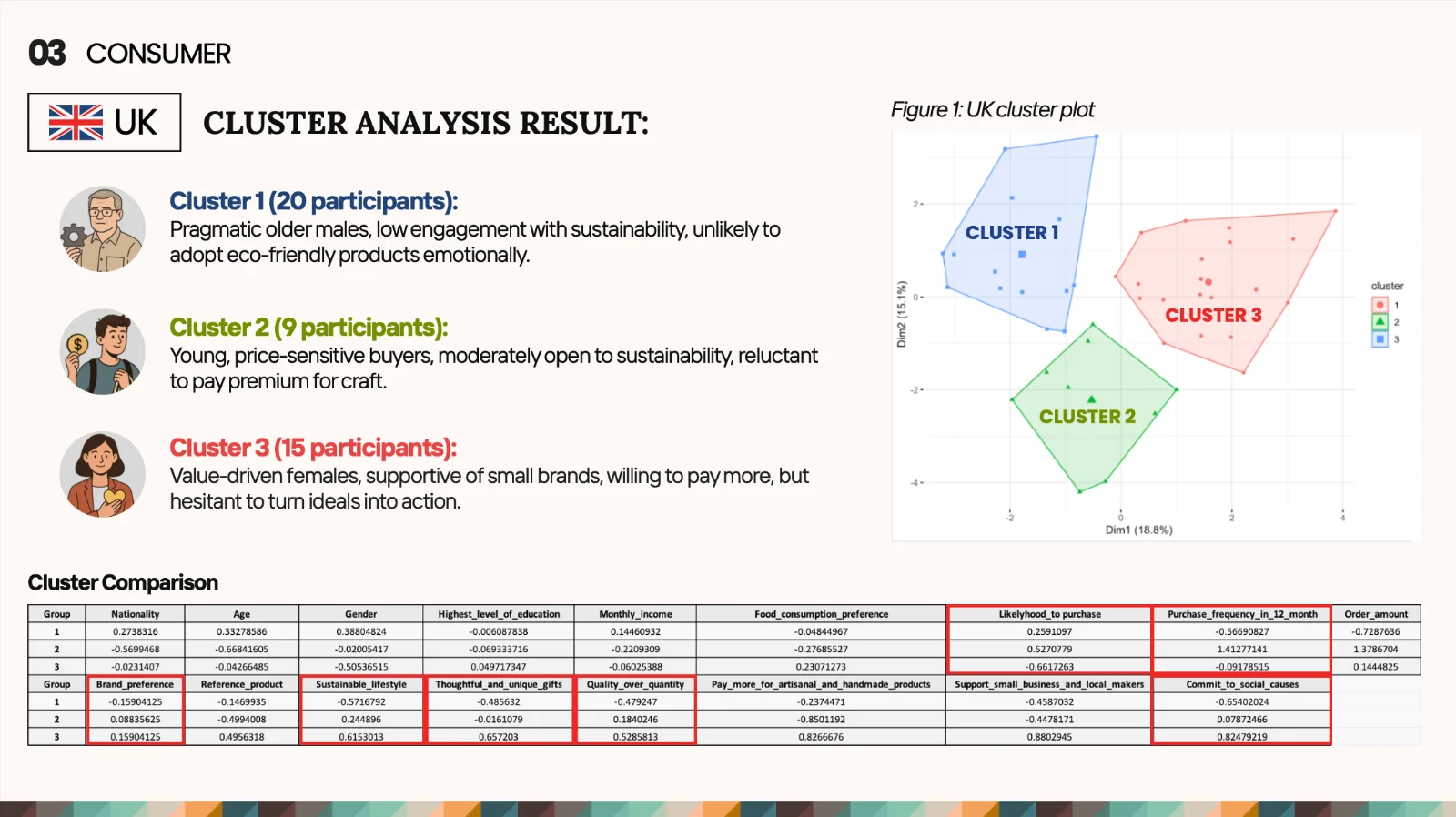
As part of a six-person LSE consulting team, I helped develop a go-to-market strategy for the UK and Germany. My main responsibility was customer segmentation and pricing. I used cluster and conjoint analysis to identify three target segments, understand their product preferences and translate their willingness to pay into market-specific pricing recommendations.
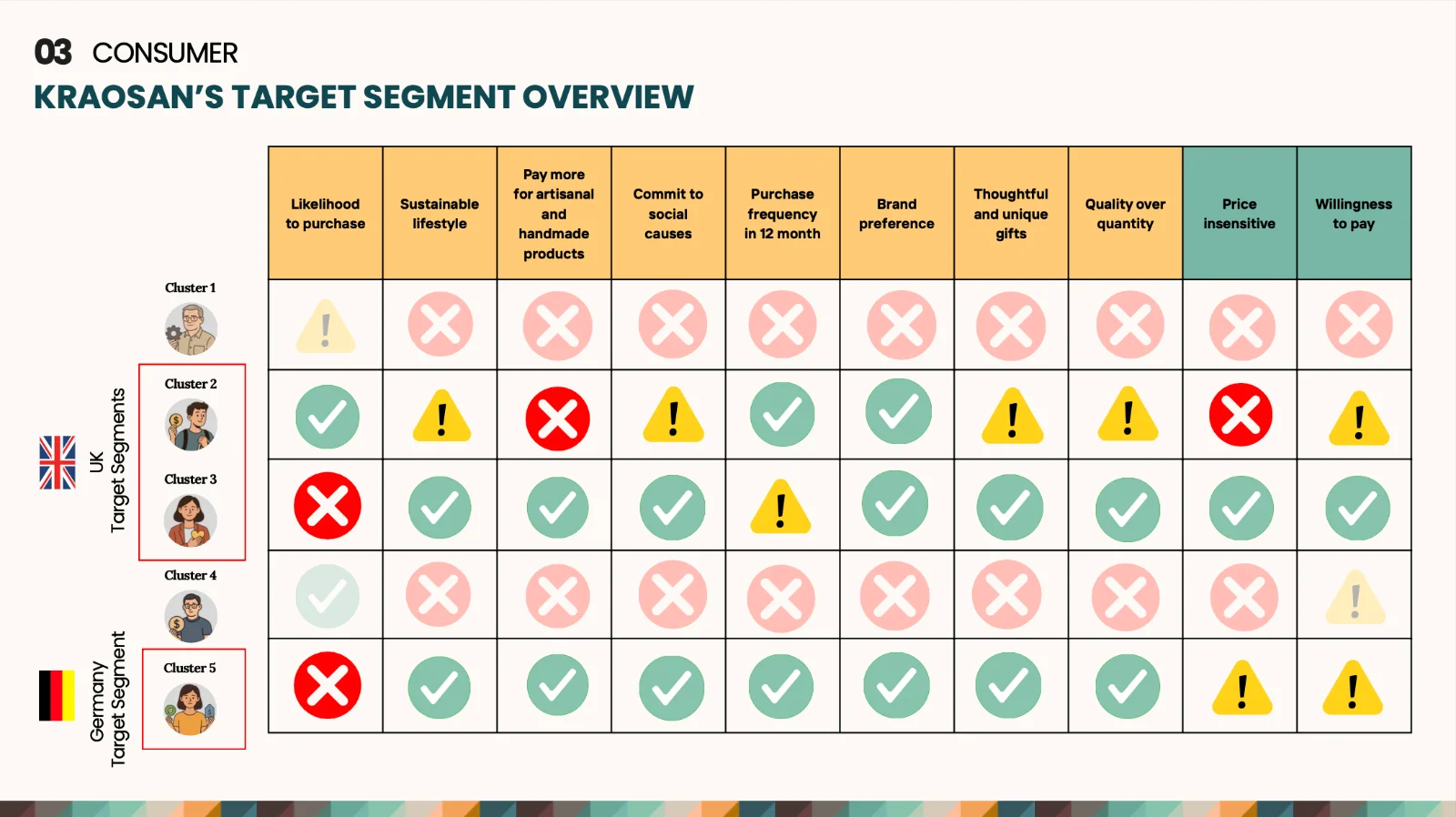
Used cluster analysis to prioritise two UK segments and one German segment based on their buying behaviour, attitudes towards sustainability and willingness to pay.
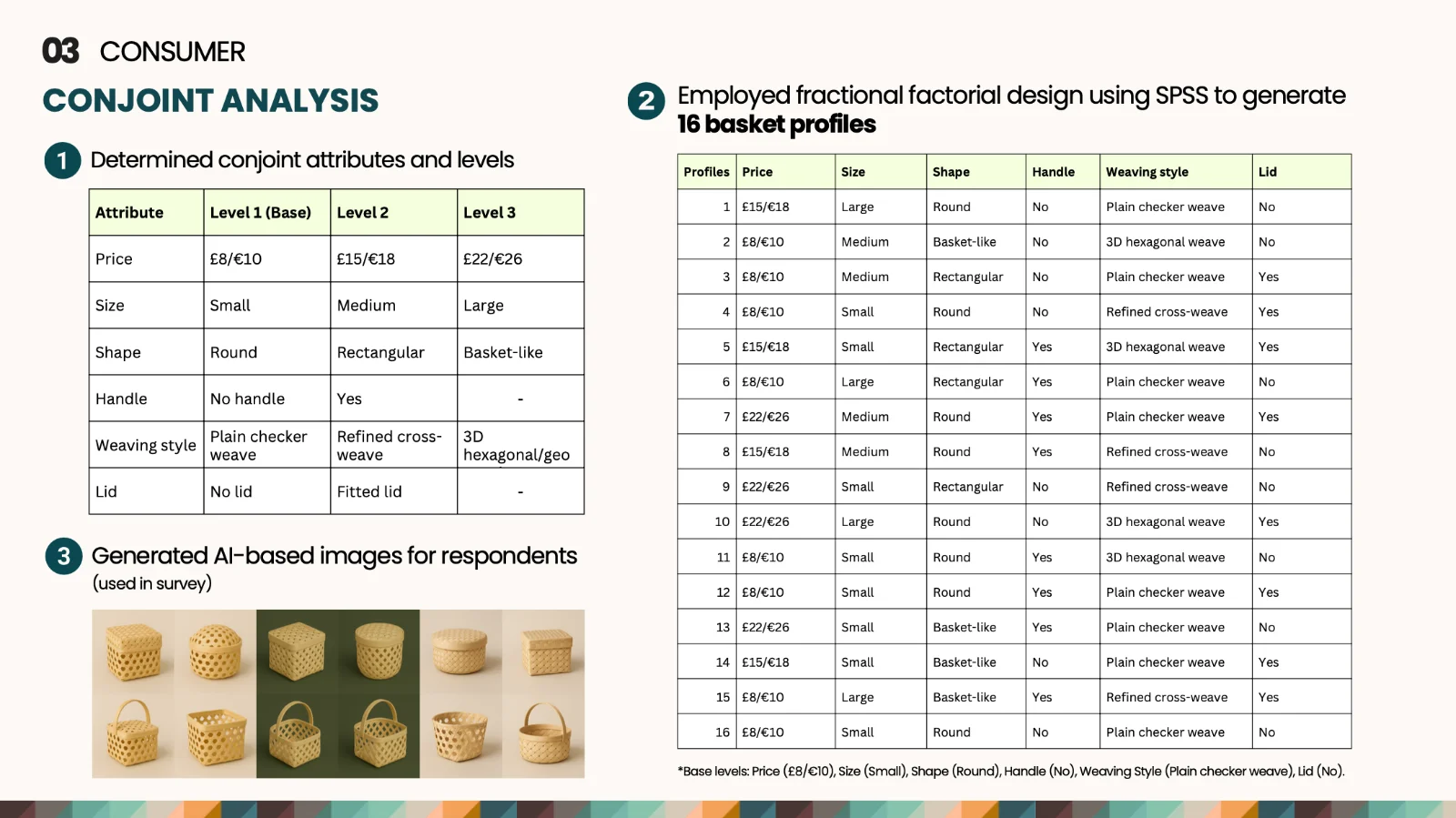
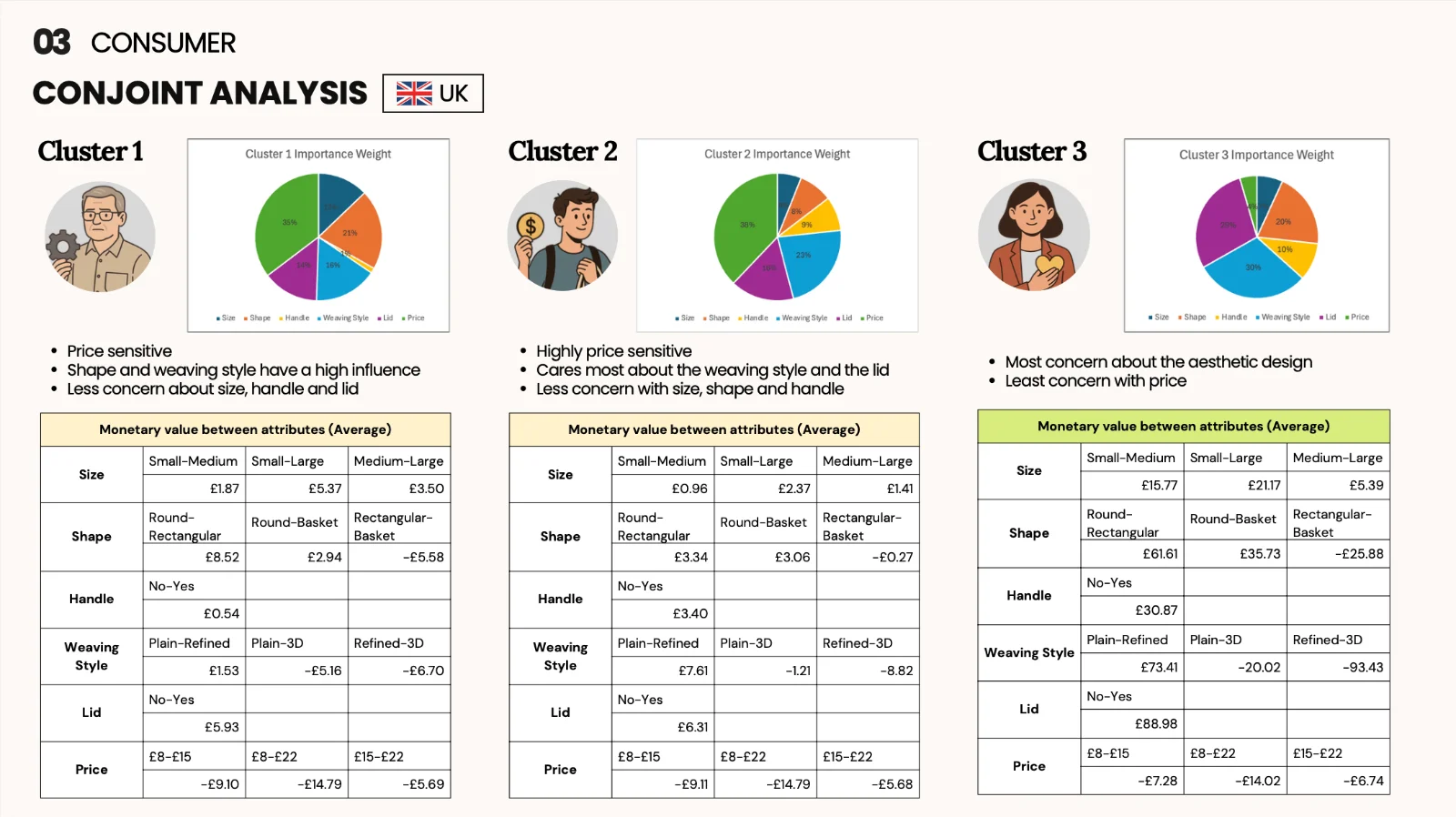
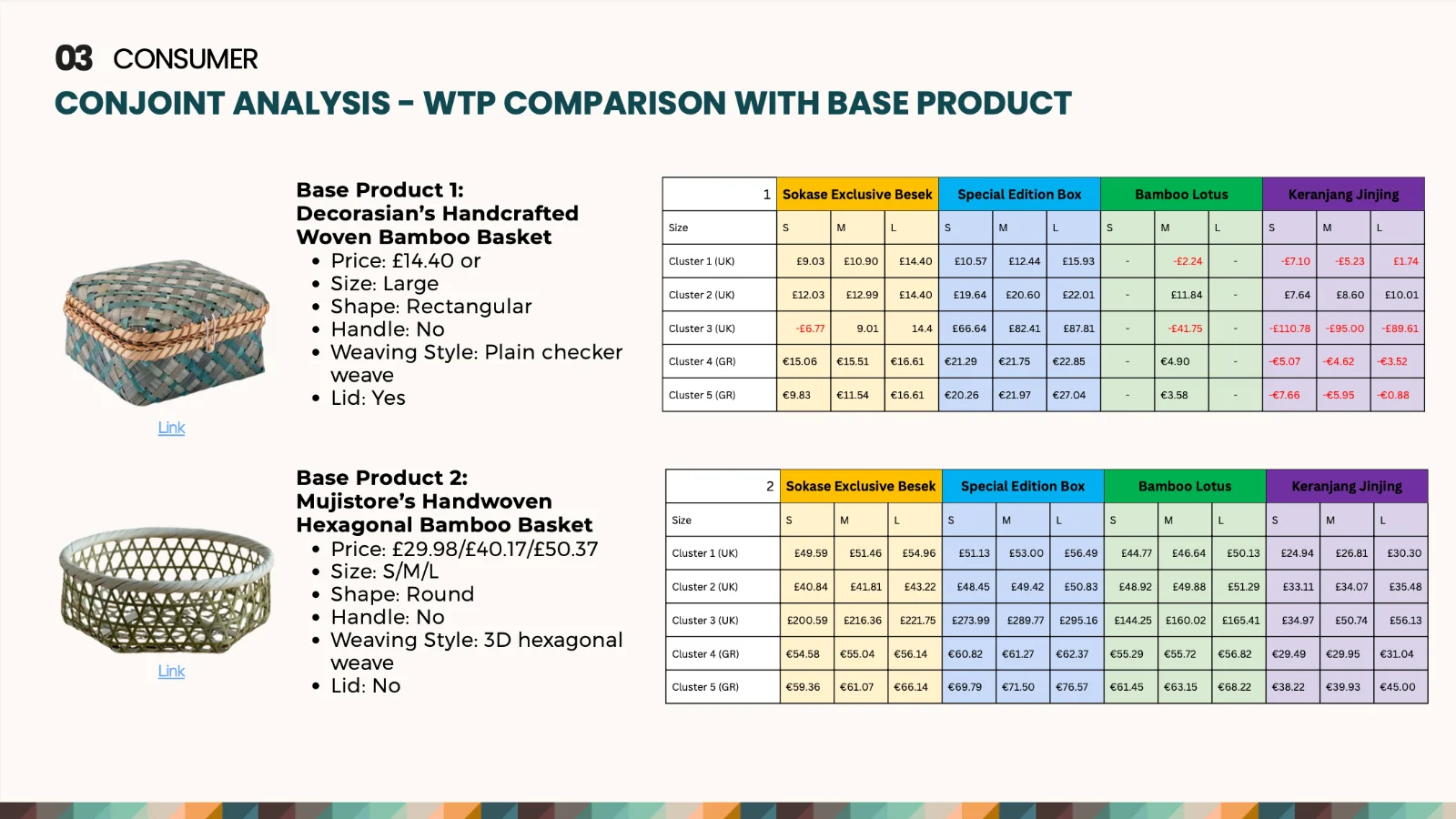
Applied conjoint analysis to measure how customers valued price, size, shape, handle, weaving style and lid features.
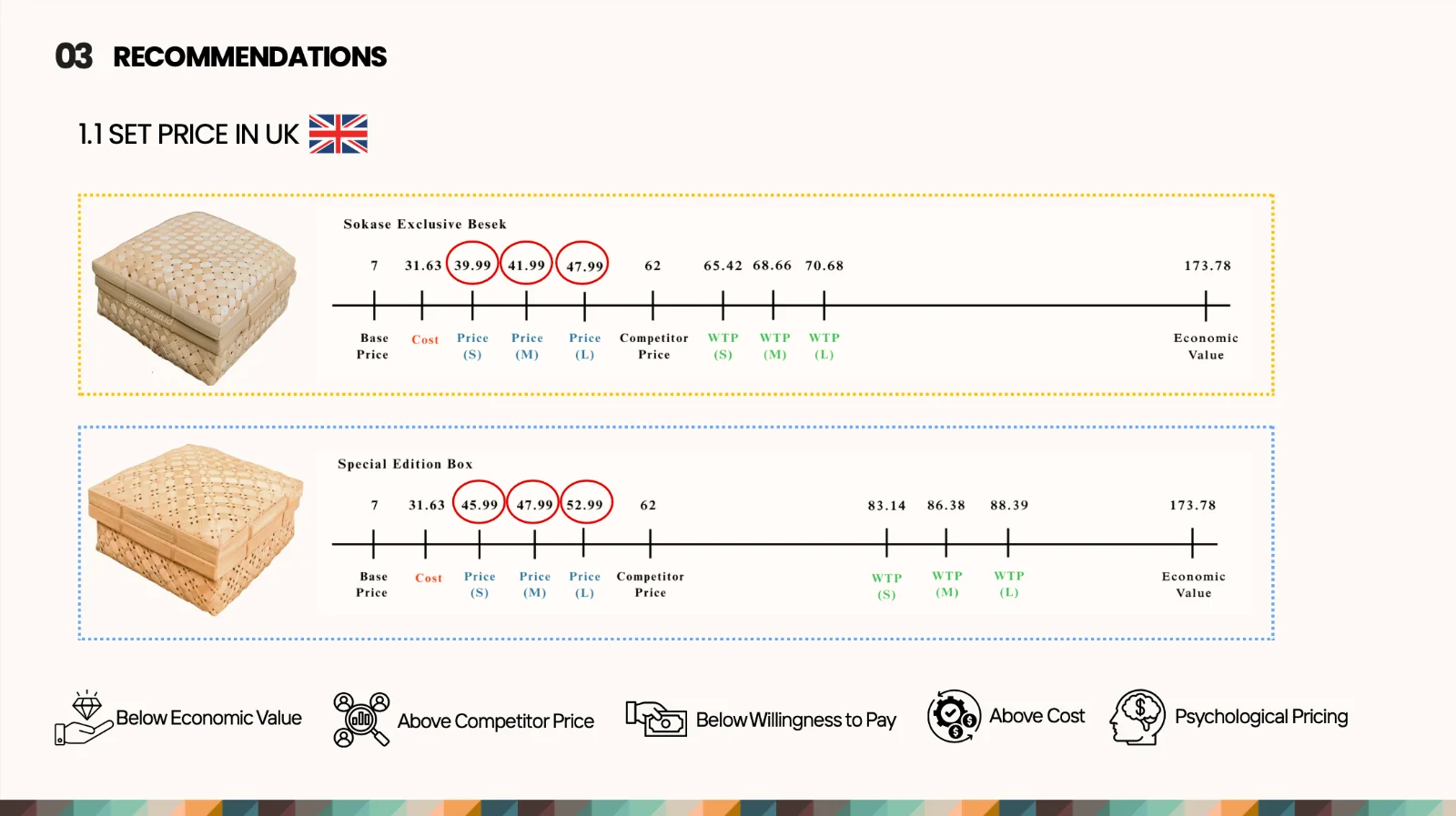
Combined willingness-to-pay results with competitor benchmarks, production costs and logistics costs to recommend prices for the UK and Germany.
Recommended launching three products and holding back one whose estimated willingness to pay offered insufficient margin and differentiation.
This project showed me that pricing cannot be considered in isolation. A price needs to reflect who the customer is, which product features they value, what alternatives are available and whether the economics work for the business. Connecting segmentation, conjoint results and cost data allowed me to turn customer research into clear recommendations on what KRAOSAN should launch, where and at what price.