
Marketing Analytics · Predictive Pricing
Airbnb hosts must consider numerous property and listing characteristics when setting a nightly price. Our project explored how predictive modelling could give hosts a more evidence-based starting point for that decision.
As part of a six-person LSE team, I helped develop a price recommendation system using data from more than 7,800 Airbnb listings and 106 variables. I was responsible for structuring the analytical workflow, preparing the numerical data and comparing predictive models. We selected XGBoost based on its test performance and incorporated its 15 most important features into a Streamlit tool that generated recommended nightly prices.
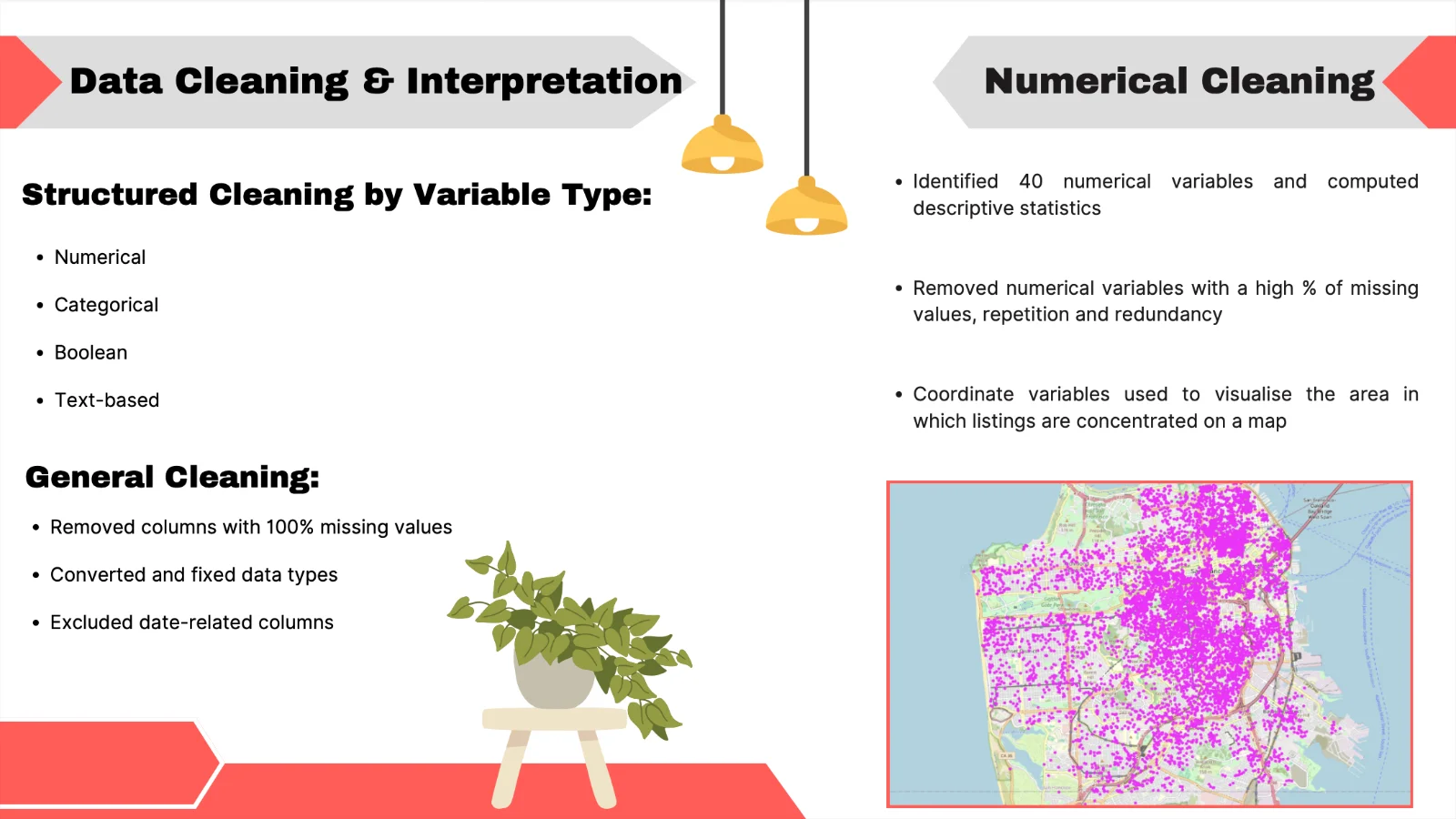
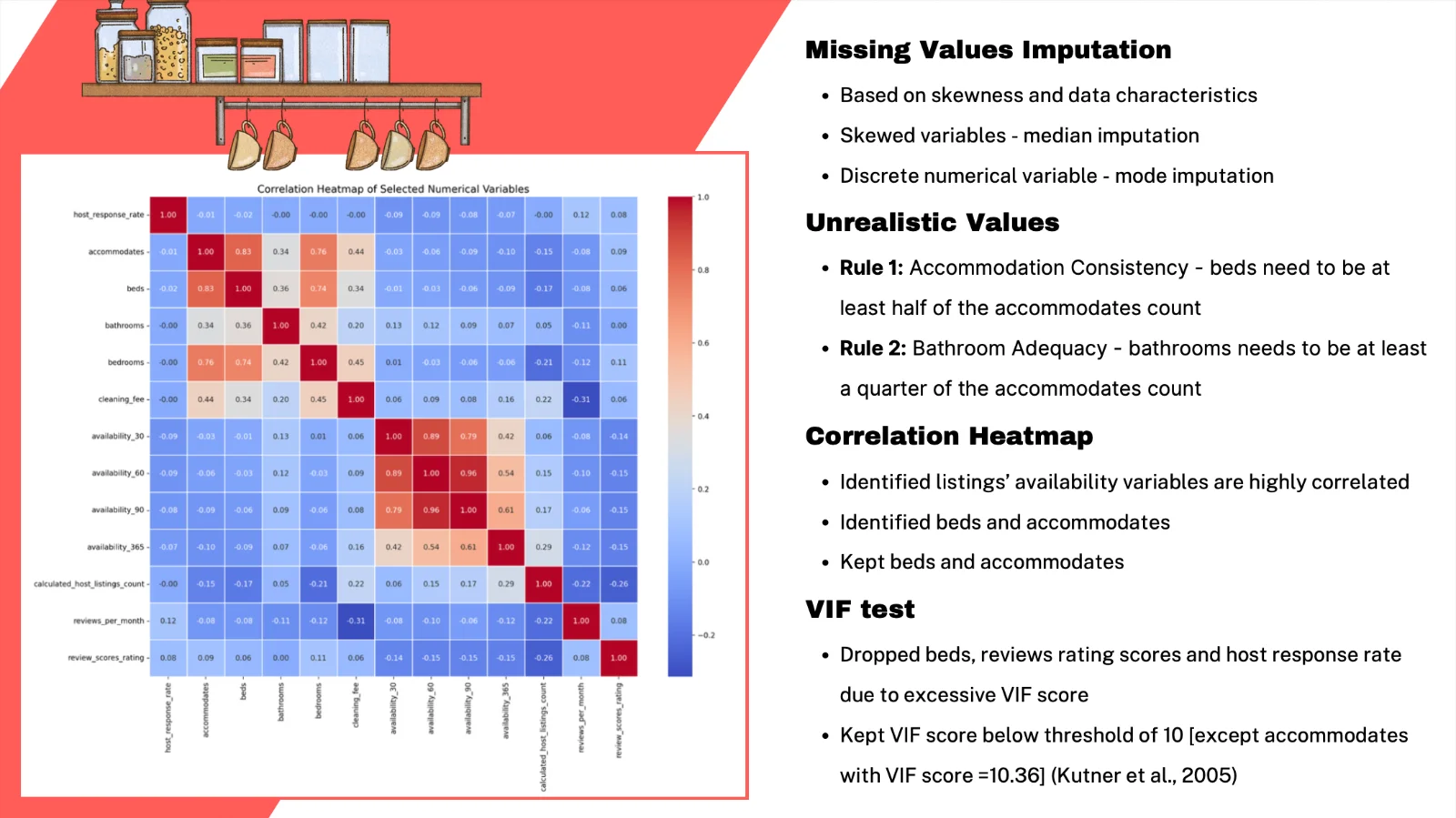
Handled missing values, treated skewed distributions and outliers, and removed redundant variables to create a reliable modelling dataset.
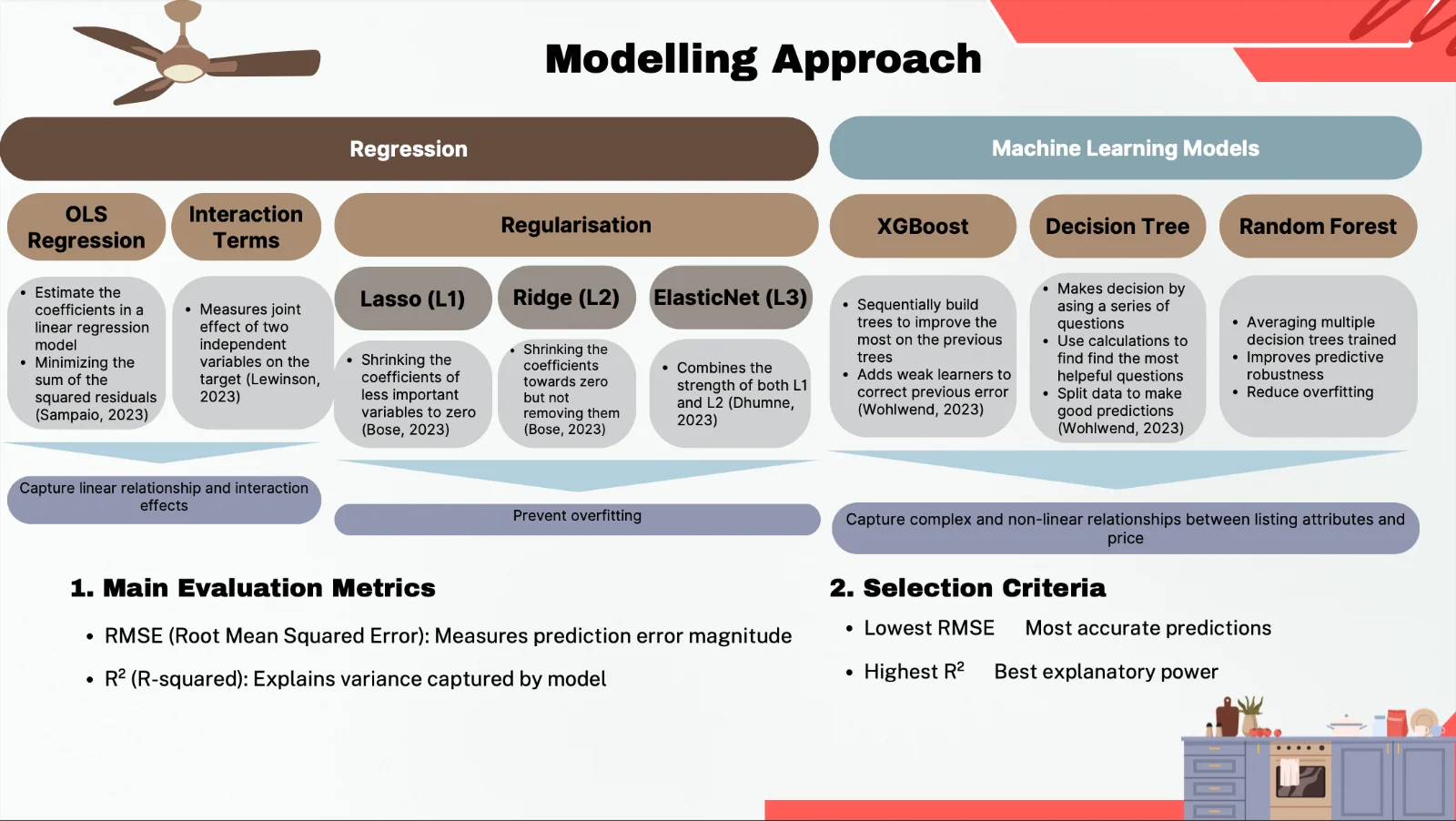
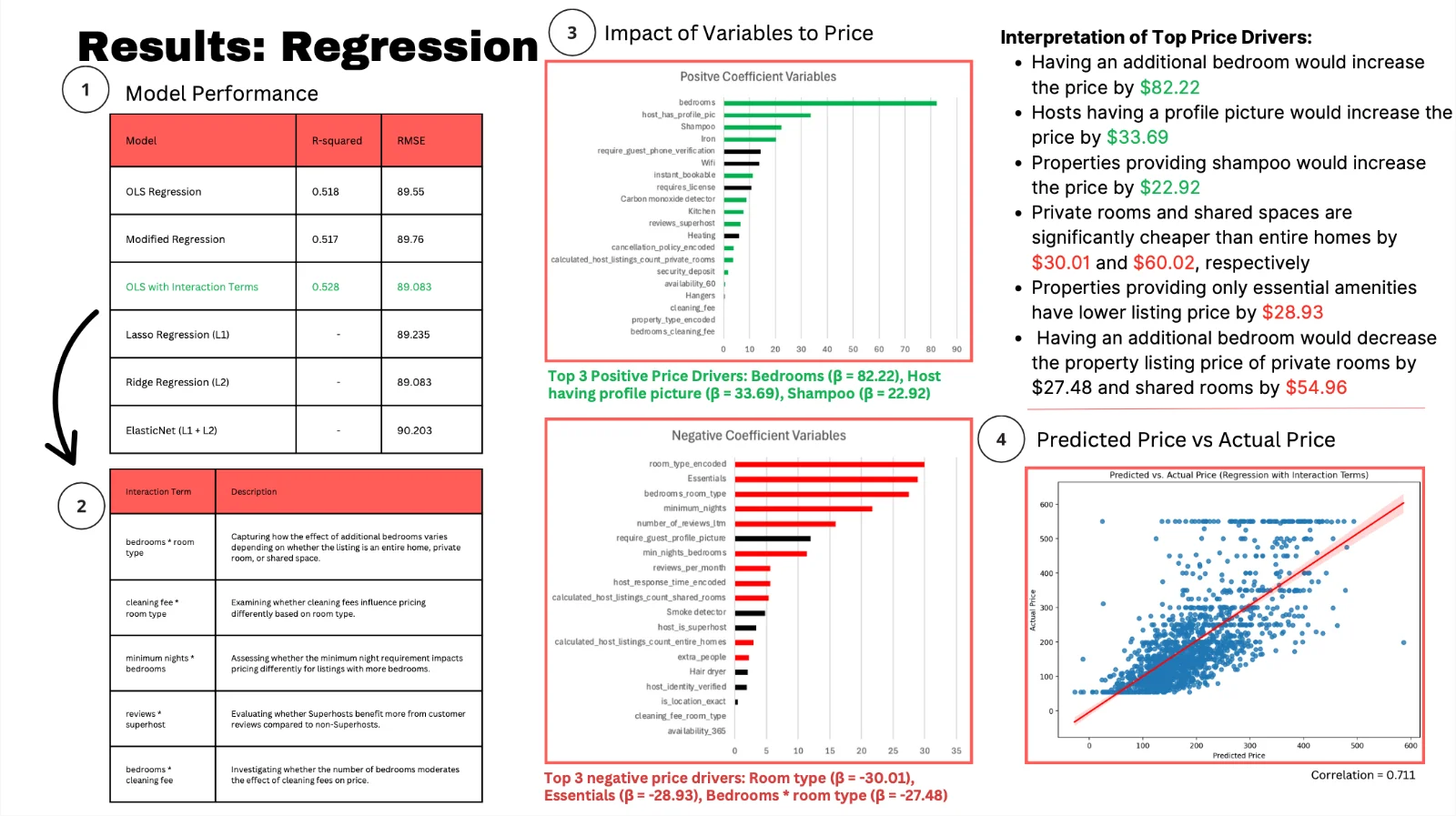
Built and compared regression, regularisation and machine-learning models in Python to test different approaches to predicting listing prices.
Selected XGBoost based on its test performance and identified the 15 variables with the greatest influence on its predictions.
Co-developed an interface that converted property details into a recommended nightly price, allowing hosts to use the model without writing code.
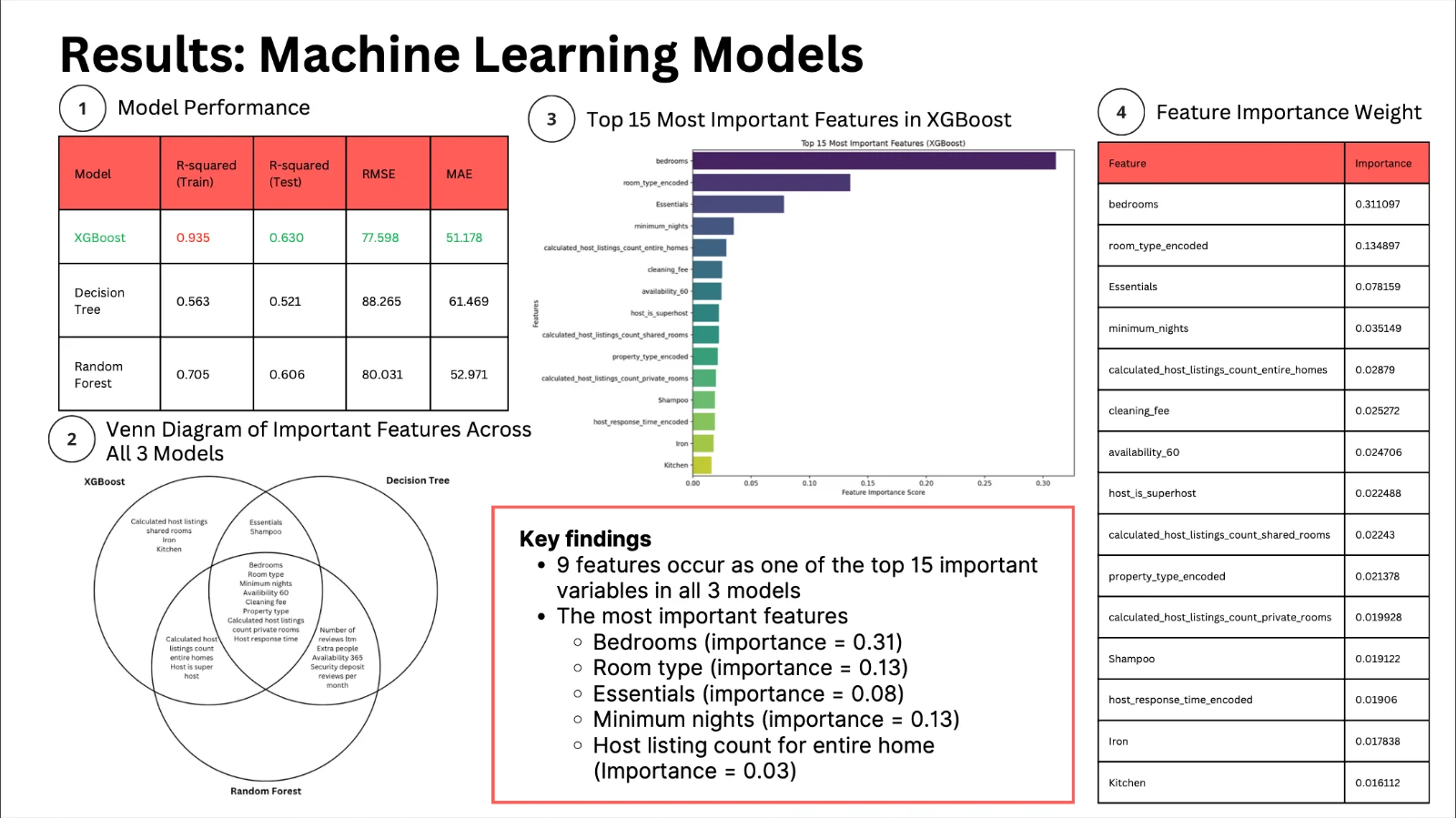
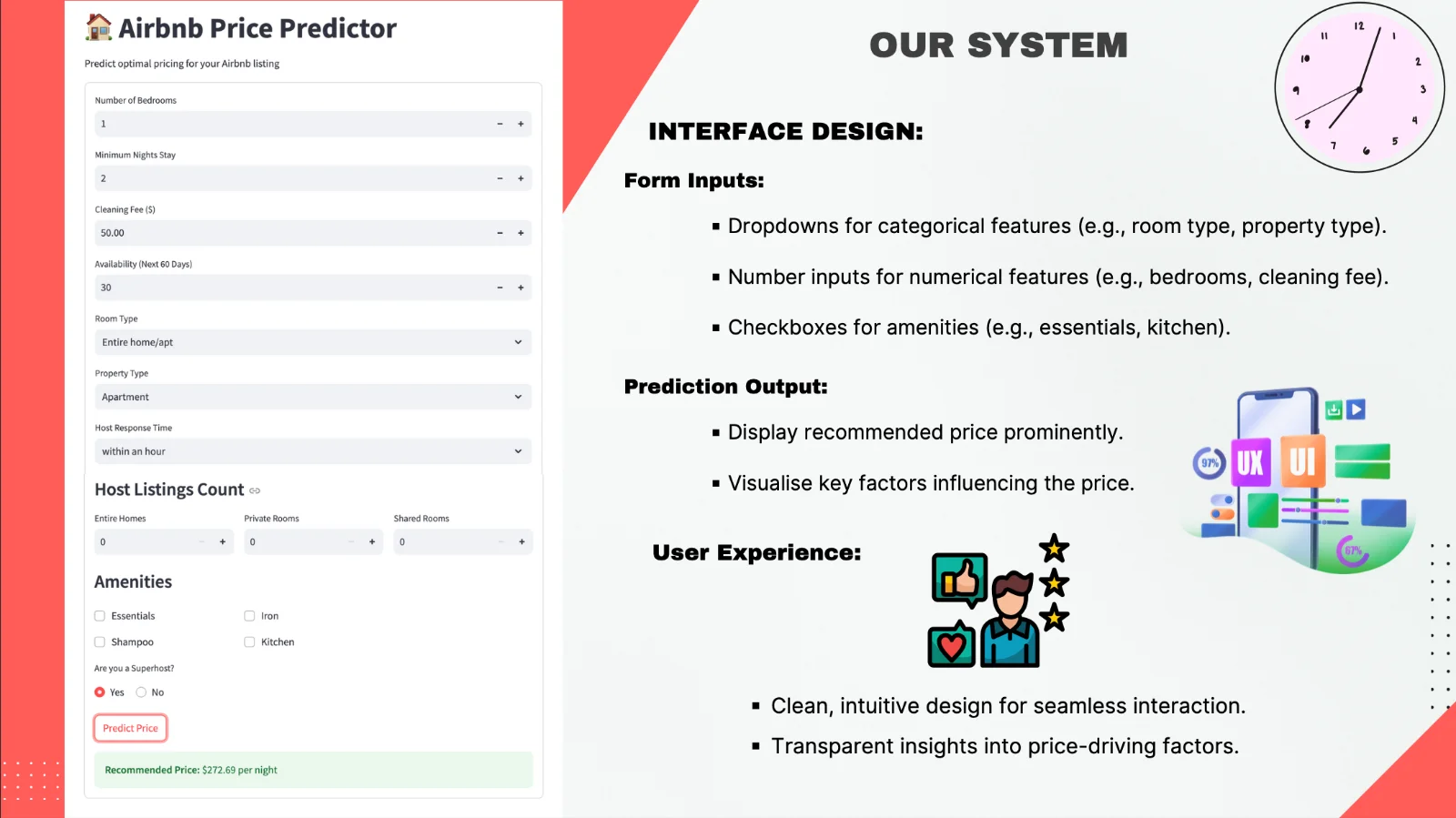
This project showed me that analysis creates more value when people can use its output. Comparing the models helped us select the strongest predictive approach, while the Streamlit interface translated that model into a practical tool for hosts. It also taught me to consider performance alongside limitations, including the absence of seasonality, real-time demand and data from other locations.